Lower Denture Problems and Solutions: A Denturist's Complete Guide
Struggling with a loose, sore, or slipping lower dentures? This complete guide from Sullivan Denture Centre in Surrey, BC covers every major lower denture problem — and exactly what to do about each one.
Lower dentures are inherently harder to stabilize than upper ones because the lower jaw is smaller and lacks the suction surface of the palate. The most common problems — slipping, sore spots, difficulty chewing, and loosening over time — all have solutions. Those solutions range from adhesives and professional relining to implant-supported dentures. If your lower denture causes daily frustration, a visit to a licensed denturist is the fastest path to relief.
If you wear a lower denture and it refuses to stay put, you are in the majority. Lower dentures generate more complaints than any other appliance in denture care — far more than upper dentures — and the reasons are rooted in anatomy, not craftsmanship.
The good news: every major lower denture problem has a corresponding solution. Some you can manage at home. Others require a professional who can assess and adjust the fit. This guide covers both, drawing on the clinical realities that denturists at Sullivan Denture Centre in Surrey, BC see every day.
Why lower dentures are harder to stabilize
Upper dentures cover the entire palate, which gives them a large, flat, stationary surface to adhere to. The result: a near-airtight suction seal that keeps the appliance firmly in place.
The lower jaw offers none of that. Lower dentures sit on a narrow, horseshoe-shaped ridge of bone that is far smaller than the upper palate. There is no closed surface for suction to form against. Add to that the constant movement of the tongue, cheeks, and lips with every word spoken and every bite taken, and it becomes clear why lower dentures require muscle adaptation that upper dentures do not.
Several anatomical factors make fit even more challenging:
- Insufficient bone ridge height: If you have been without natural teeth for years, alveolar bone resorption — the gradual shrinkage of the jawbone after tooth loss — can flatten or narrow the lower ridge. A shallow ridge gives the denture less surface area to rest on.
- Tongue displacement: The tongue rests directly alongside the lower denture. Its movement during speaking, swallowing, and eating creates lateral forces that lift and shift the appliance.
- Muscle learning curve: Lips and cheeks that once coordinated with natural teeth need to re-learn how to hold a denture in position. This typically takes 6–12 weeks of consistent wear.
- What you can do: Wear your lower denture throughout the day, every day. The more you wear it, the faster the surrounding muscles adapt to keeping it stable. Removing it whenever it feels loose slows that adaptation considerably.
Sore spots: causes and relief
A lower denture that moves can rub. Friction between the acrylic base and soft gum tissue creates pressure sores — small, painful ulcers that typically appear on the lower gum ridge or the inside of the cheeks. Sore spots are one of the top reasons patients stop wearing their lower denture altogether.
Common causes:
- Ill-fitting or loose denture: As the jaw changes shape over time, dentures that once fit perfectly start to create uneven pressure points. Movement translates directly into abrasion.
- New denture adjustment: In the first 2–4 weeks after receiving new dentures, some soreness is normal as gum tissue adapts to the appliance.
- Overextended denture borders: When the edges of the denture press too far into the soft tissue of the floor of the mouth, persistent soreness results.
- Denture stomatitis: Prolonged poor fit combined with inadequate cleaning can cause a yeast infection (candidiasis) beneath the denture, producing redness, swelling, and tenderness.
Home relief options:
- Rinse with warm saltwater (½ tsp of salt in a glass of warm water) twice daily — this soothes inflammation and promotes healing.
- Remove the denture for at least 6–8 hours overnight to allow tissue to recover.
- Over-the-counter topical gels (benzocaine-based) can temporarily numb acute sore spots.
When to see a denturist: If sores persist beyond 7–10 days, or if new sores develop after a period of comfort, the denture needs a professional assessment. Persistent rubbing from a poorly fitting appliance causes tissue damage that goes well beyond normal adjustment. Chronic sore spots are a direct signal the fit requires attention.
Denture adhesive: help or a mask?
Denture adhesive provides useful support for lower dentures — particularly in the first few months while the mouth is still adapting, or when small gum changes create a temporary reduction in fit.
Used correctly, adhesive increases retention, reduces movement during meals, and adds a cushioning layer between the denture base and gum tissue. Our guide to dental adhesives and denture glue covers the different product types and proper application in detail.
The important caveat: If you need large amounts of adhesive every single day just to keep the lower denture manageable, the adhesive is masking a fit problem rather than solving one. Well-fitting dentures require little to no adhesive. Chronic heavy adhesive use also:
Builds up beneath the denture and distorts bite alignment over time
Delays necessary professional treatment
Masks progressive bone loss that continues to worsen without intervention
The rule of thumb: Adhesive as occasional support — perfectly reasonable. Adhesive as a daily crutch for a visibly loose denture — see your denturist.
Why lower dentures loosen over time
This is one of the most common questions denturists hear: "My lower denture fit perfectly at first — why is it loose now?"
The answer is alveolar bone resorption. Once natural teeth are removed, the bone that previously held their roots no longer receives stimulation from chewing forces. Without that stimulation, the body gradually reabsorbs the bone. This process begins within days of extraction and continues throughout life.
The lower jaw typically experiences more rapid bone loss than the upper jaw. Research shows that bone height in the lower jaw can decrease up to four times faster than in the upper jaw over a 25-year period.
As the ridge shrinks, the denture — custom-fitted to the original ridge shape — gradually loses contact with the tissue it rests on. The fit gap widens, movement increases, and sore spots return. This is normal biology, not a defect in the denture.
What this means practically:
- Lower dentures typically need relining every 2–5 years as the jaw changes shape.
- Dentures that are 7–10 years old may be past their effective service life and need replacement rather than adjustment.
- Significant weight loss can accelerate this process, as changes in facial and jaw soft tissue also affect fit.
Signs you need a reline
A denture reline resurfaces the fitting side of the denture with new material shaped to match the current contour of your gum ridge. It is the primary clinical solution for a lower denture that has loosened due to bone and tissue changes.
Signs that point to a reline:
- The denture lifts or rocks when you bite down
- It moves noticeably when you speak, laugh, or yawn
- Sore spots have developed or returned after a period of comfort
- You are using significantly more adhesive than before
- The denture feels lower in your mouth than it used to
- Food traps more easily underneath it
At Sullivan Denture Centre, relines are completed in the on-site lab — which means same-day turnaround for most patients. No leaving without your denture, no waiting days for a return appointment. Our full breakdown of denture relining and rebasing explains the difference between a soft reline, hard reline, and a full rebase — and which situation calls for which.
Reline vs. replacement: If the denture teeth are significantly worn, the bite has shifted, or the acrylic base is cracked or degraded, a reline may not be enough. In that case, a new denture is the better long-term investment.
How to eat with a slipping lower denture
Eating with a lower denture that slips is one of the most frustrating daily realities for many wearers. A few technique adjustments reduce movement considerably at mealtimes:
Chewing technique:
Chew on both sides of the mouth simultaneously rather than one side at a time. Unilateral chewing creates a rocking motion that lifts the denture on the opposite side.
Take smaller bites and chew slowly. Large, rapid bites generate more force and more opportunity for displacement.
Cut food into small pieces before placing it in your mouth — this applies especially to firm or chewy foods.
Food choices:
Avoid very sticky foods (caramel, gummy candy, dense peanut butter) — they pull the denture upward on release.
Avoid hard foods that require heavy biting force (hard crusty bread, raw carrots, whole apples).
Soft, moist foods are easiest: well-cooked vegetables, tender protein, softer bread varieties.
Adhesive timing:
If you use adhesive, apply it just before a meal — adhesive performance diminishes over several hours.
Rinse the mouth before eating to remove any residue that reduces adhesive contact.
These are management strategies, not fixes. If mealtimes consistently require vigilance to keep the lower denture in place, the underlying fit needs professional assessment.
When implant-supported dentures make sense
For patients where relining and adhesive no longer provide adequate stability — particularly those with significant bone loss or many years of lower denture wear — implant-supported dentures offer a fundamentally different level of security.
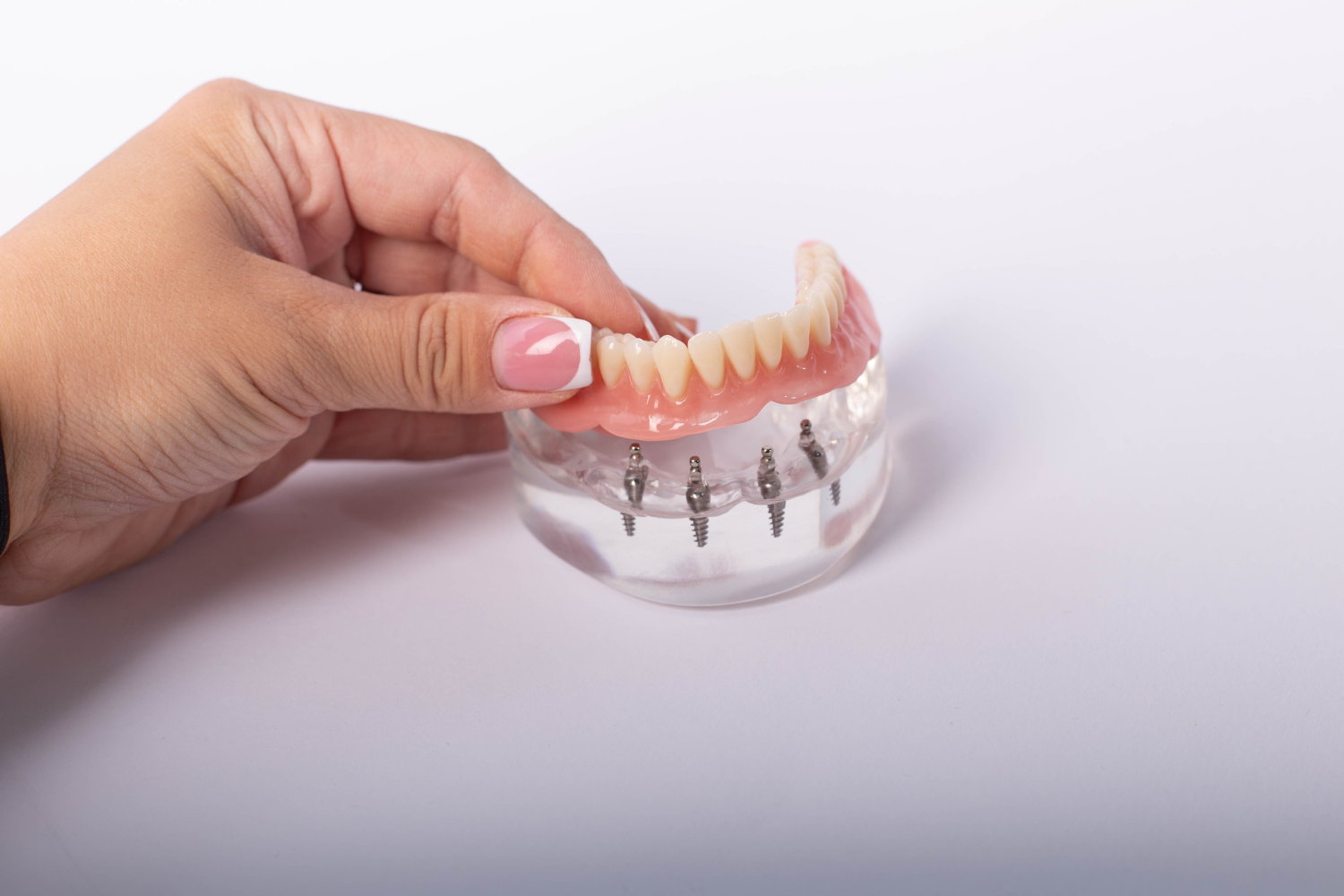
An implant-supported lower denture uses 2–4 titanium implants placed into the jawbone. The denture snaps onto these implants, eliminating the movement that makes conventional lower dentures frustrating.
Key benefits: The denture stays firmly in place during eating, speaking, and laughing — no rocking, no lifting
Chewing force transfers through the implants to the jawbone, which actively slows further bone resorption
No daily dependence on adhesive
Patients consistently report significant improvements in confidence and quality of daily life
Who is a candidate? Candidates need sufficient bone volume to place implants. Patients with severe bone loss may require a bone graft before implant placement. A thorough assessment by your denturist and the referring oral surgeon determines candidacy.
At Sullivan Denture Centre, our denturists work with patients considering implant-supported solutions and can walk you through the three main attachment systems — bar-retained, ball-retained, and locator attachment — to help clarify which fits your situation. Our guide to dentures on implants covers each option in detail.
Getting help in Surrey, BC
If you are a lower denture wearer in Surrey or the Greater Vancouver area and your denture causes daily frustration, the starting point is a consultation with a licensed denturist.
A denturist's training is entirely focused on removable dental prosthetics. At Sullivan Denture Centre, we have years of experience solving exactly the problems described in this guide. Every assessment, reline, repair, and new denture is completed in the on-site lab — which means same-day results in most cases.
Sullivan Denture Centre also offers direct billing for patients covered under the Canadian Dental Care Plan (CDCP), reducing out-of-pocket costs for eligible patients who need relines, repairs, or new dentures.
Book a consultation: Call (604) 577-0007 or visit sullivandentures.com.
FAQ
Why does my lower denture click when I eat?
Clicking occurs when the denture shifts up and reseats repeatedly during chewing. It is a sign of insufficient retention and typically means a reline or professional assessment is needed.
Can I sleep with my lower denture in?
Most denturists recommend removing dentures at night. Overnight wear limits the gum tissue recovery time your mouth needs and increases the risk of fungal overgrowth beneath the appliance. Remove, clean, and soak your denture in water or a cleaning solution overnight.
How often do lower dentures need to be replaced?
Most dentures have a functional lifespan of 6–10 years. After that point, worn teeth, degraded acrylic, and cumulative bone changes typically make replacement more cost-effective than continued relining.
Is it normal for a brand-new lower denture to feel loose?
Some movement in the first 6–12 weeks is normal while surrounding muscles adapt. However, if the denture visibly rocks or lifts within the first few days, a follow-up adjustment appointment is warranted.
Does the CDCP cover lower denture relines and rebases in BC?
CDCP coverage for denture services including relines and rebases varies by patient eligibility and the specific procedure code. Sullivan Denture Centre offers direct CDCP billing and can verify your coverage at the time of your consultation.
Sullivan Denture Centre is located in Surrey, BC. and served the community for over 29 years. Call
(604) 577-0007 to book your assessment.